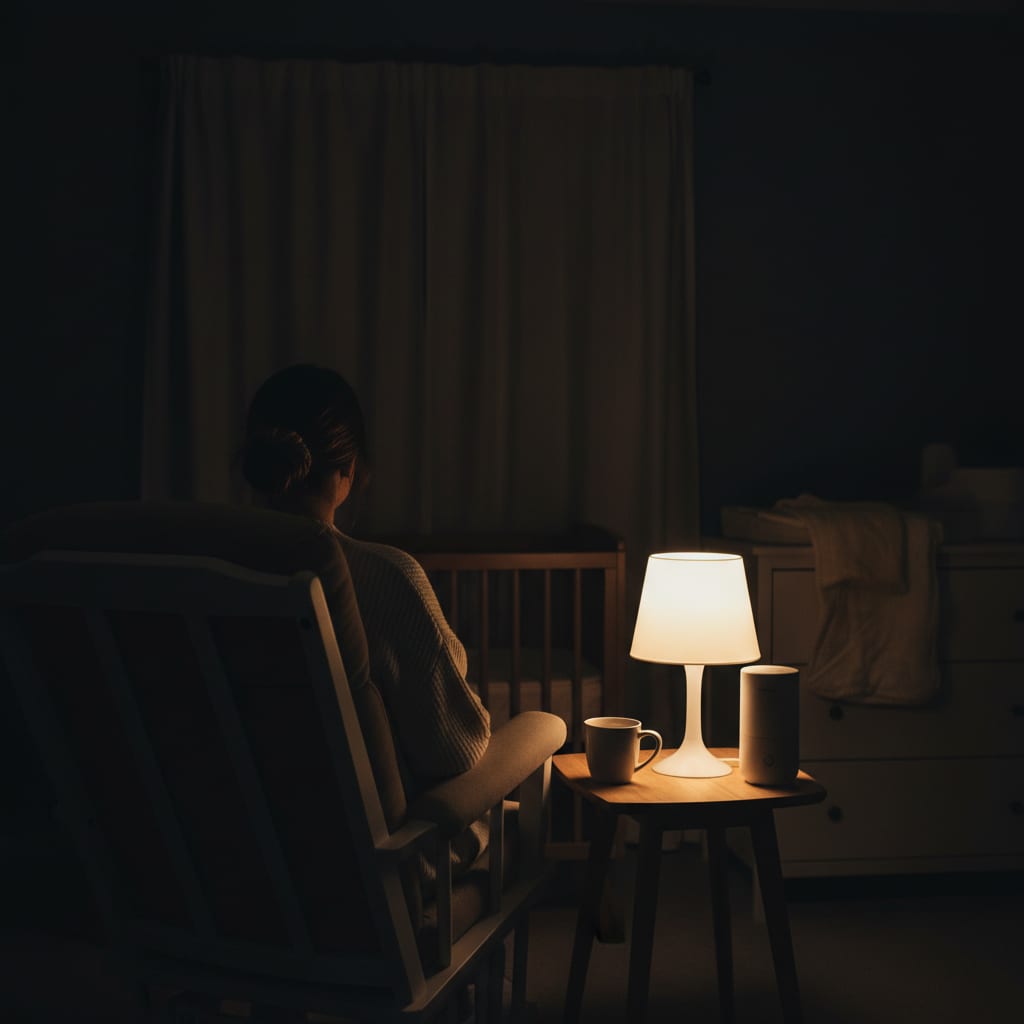
Baby Short Naps: Why 30-45 Minutes and What to Try
Why baby short naps end at 30-45 minutes, when a short nap is normal, and what a sleep consultant tries first to lengthen them without a nap schedule chart.

Baby short naps, the ones that end at 30 to 45 minutes on the dot, usually mean your baby woke at the end of one sleep cycle and could not link into the next. Baby sleep cycles last about 50 minutes, so a nap of one cycle is exactly what you are seeing. Under about five or six months that is often simply normal. After that, the usual causes are timing (too tired or not tired enough), a room that is too bright or noisy, and a baby who needs the same help to resettle that they needed to fall asleep.
I make my living in this industry, and short naps are one of the most common reasons parents book a call. Most of the time, the fix is free. Here is how I work through it.
Why naps stop at 30-45 minutes
The Sleep Foundation’s guide to baby sleep cycles puts it simply: “Baby sleep cycles last about 50 minutes, compared to 90 minutes for adults.” It adds that newborns “spend about half of their sleep in REM”, the lighter, active sleep, and that babies’ cycles become more adult-like as they grow.
So at the end of a cycle your baby surfaces into light sleep. An adult rolls over and goes back under. A baby who has not yet learned to do that, or who notices something has changed since they fell asleep, wakes fully. That is the 35-minute nap.
Short naps are also within the ordinary range. KidsHealth’s sleep guide for 8 to 12 months says: “Some babies nap for 30 minutes, while others nap for up to 2 hours.” A baby who naps briefly but often, and is content between naps, may not have a problem at all.
Is it a problem? A quick check
| What you are seeing | Likely a problem? | Why |
|---|---|---|
| Under about 5 months, short naps, happy awake | Usually not | Cycle-linking is still developing |
| Wakes from a short nap smiling and playing | Usually not | The nap may have been enough |
| Wakes crying, still yawning and rubbing eyes | Yes | They needed more sleep than they got |
| Short naps plus a meltdown by late afternoon | Yes | Day sleep is falling short |
| Short naps and night sleep also falling apart | Yes | Often overtiredness carrying over |
If it is in the top two rows, I would change nothing. If it is in the bottom three, work through the causes below in order.
The causes I check, in order
1. Timing
The two timing errors look identical from the outside. An overtired baby can be wound up and wake early; an undertired baby has too little sleep pressure to get through a second cycle. If you used to get longer naps and they shortened recently, your baby may have outgrown their awake times; my piece on when wake windows stop working covers how to test that. If your baby fights every nap and then crashes, look at overtiredness first, which my overtired-baby guide walks through.
Try moving the nap 15 minutes either way for three days at a time. Do not change both directions in one week.
2. The room
A nap in daylight is harder than a night in the dark. At the cycle change your baby is in light sleep, and a bright window or a door slamming is enough to tip them awake. Two inexpensive changes help most often:
- Dark. Blackout curtains such as NICETOWN blackout panels make day sleep look more like night sleep.
- Steady sound. Continuous white noise for the whole nap covers household sounds at the moment your baby surfaces.
3. How your baby fell asleep
If your baby fell asleep feeding, rocking or in your arms and woke in a crib, they surfaced somewhere different from where they dozed off. That is often what turns a light-sleep stir into a full waking. You do not have to change this for every nap. Try putting your baby down drowsy for the first nap of the day, which tends to be the easiest, and leave the others as they are.
4. Hunger
A baby who fed lightly before the nap may wake hungry at 40 minutes. If you follow an eat-play-sleep rhythm, make sure the feed after waking is a full one rather than a snack.
What to try when your baby wakes at 35 minutes
- Wait a few minutes before going in. Some babies grumble at the cycle change and settle again on their own.
- Go in quietly and try to resettle in the crib: a hand on the chest, a shush, white noise up a notch. Keep the lights down.
- If that fails within about ten minutes, end the nap. Get your baby up, and bring the next nap a little earlier.
- Rescue one nap a day, not all of them. A contact nap or a stroller walk for the late-afternoon nap is a fine way to get through to bedtime.
The goal is one longer nap a day, not every nap stretched. Many babies keep at least one short nap well into their second half-year.
When to talk to your pediatrician
Short naps on their own are rarely medical. But if your baby snores, breathes noisily or through the mouth in sleep, seems uncomfortable lying flat, is feeding poorly or seems unwell, raise it with your pediatrician before you change any routine. That is a pediatrician conversation, full stop.
The free version of this advice
You do not need a nap schedule chart or an app for this. Write down nap start times, nap lengths and how your baby woke for five days. If the short naps come with a happy baby, leave them alone. If not, change one thing at a time: the timing, then the room, then how your baby falls asleep for the first nap. Give each change three days.
What I’d tell a client
A 35-minute nap is one sleep cycle, and under about five months it is usually normal. Past that, check whether your baby wakes happy or still tired before you fix anything. If they wake tired, adjust the timing first, darken the room and add steady sound, and practise falling asleep in the crib for the first nap only. Aim for one longer nap a day, not a perfect schedule.
FAQ: baby short naps
Why does my baby only nap for 30 minutes?
Baby sleep cycles last about 50 minutes, and a baby who has not yet learned to link cycles wakes when one ends. Timing, light, noise and how your baby fell asleep all affect whether they go back under.
Are 45-minute naps normal?
Yes, especially under about five or six months. If your baby wakes content and copes well until the next nap, a 45-minute nap may be enough.
When do baby naps get longer?
It varies. Many babies start linking cycles for at least one nap somewhere in the second half of the first year, but some nap briefly for longer. Day sleep varies a lot between healthy babies.
Should I wake my baby from a long nap?
A very long late-afternoon nap can push bedtime later. If a nap is eating into the evening, ending it gently is reasonable. Ask your pediatrician if your baby is very hard to wake.
Does sleep training fix short naps?
Sometimes, but naps usually improve more slowly than nights, and some babies keep short naps whatever method you use. Fix timing and the room first.
More in the Sleep Methods file.