Sleep Training While Teething: Pause, Push On or Adjust?
Sleep training while teething: when to keep going, when to pause, how to tell teething from a setback, and what the AAP and FDA say about soothing sore gums.
You can usually keep sleep training while teething, with adjustments. Teething can cause mild irritability and drooling, but the AAP says it does not cause a fever over 101°F, and it rarely explains weeks of bad nights on its own. Keep the plan, comfort sore gums before bed, and respond more readily on the one or two roughest nights. Pause if your baby seems genuinely miserable, has a fever, or is feeding poorly, because then the problem is probably not teeth. That is a pediatrician conversation.
I make my living in this industry, and “we’d start, but she’s teething” is something I hear all the time. Teeth arrive one or two at a time over many months. Here is how I decide.
What teething actually does
The AAP’s page on when teething starts says babies typically start teething by about four to seven months, and describes the signs modestly: teething “occasionally may cause mild irritability, a slight rise in temperature (but not over 101 degrees Fahrenheit or 38.3 degrees Celsius), excessive drooling, and a desire to chew on something hard.”
Note the words “occasionally” and “mild”. The same page is clear about where teething ends: “If your child seems particularly miserable or has a fever higher than 101 degrees Fahrenheit (38.3 degrees Celsius), it’s probably not from teething.”
So the honest picture is a baby who may be grumpier for a few days around a tooth coming through, not a baby who is in pain for months.
Pause, push on or adjust?
| What you are seeing | My call | Why |
|---|---|---|
| Drooling, chewing everything, otherwise eating and playing normally | Push on | This is ordinary teething and the plan can absorb it |
| A rough night or two with a tooth visibly about to break through | Adjust | Comfort more readily for those nights, keep the routine |
| Fever over 101°F, very miserable, pulling at ears, not feeding | Pause | Probably not teeth; call your pediatrician |
| Every night bad for weeks, blamed on teeth | Look again | Teeth rarely explain weeks; check the plan itself |
| Night three of a new method, plus a tooth | Push on, gently | Night three is often the hardest night of any method |
The last row matters. Teething comes and goes for so long that it can be blamed for almost anything, and that can stop a family from ever finishing a plan. If you paused for every tooth you would rarely get a clear week.
How to adjust without starting over
“Adjust” means responding a bit more on a bad night without throwing out what your baby has learned:
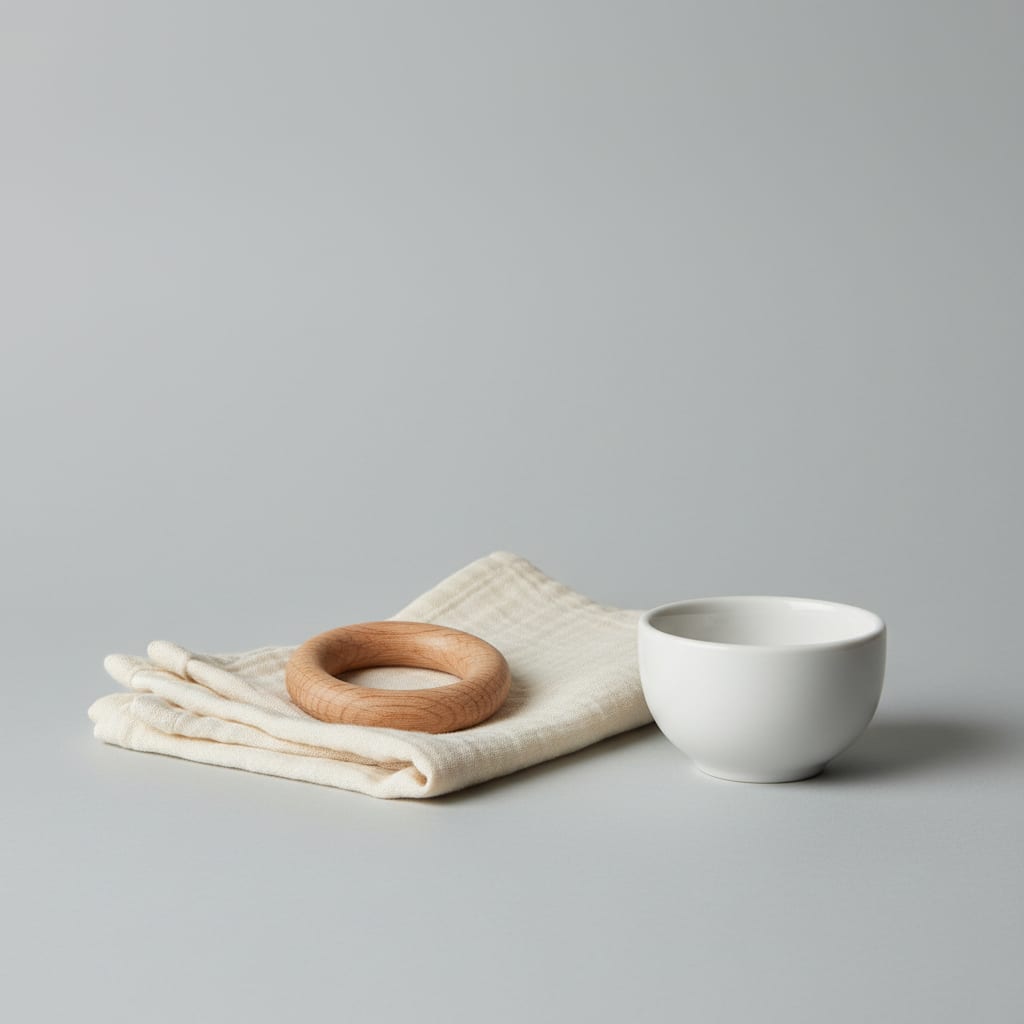
- Comfort the gums before bed, not at 2am. Rub them gently with a clean finger as part of the routine, or offer a firm rubber teething ring to chew during the wind-down.
- Keep the same bedtime and the same order of steps. Predictability is what you are protecting.
- Respond sooner on the worst nights, in the same way. If you do timed checks, shorten the gaps for a night. If you sit by the crib, stay a little longer. Use your method’s own tools.
- Avoid adding a new habit you will have to remove. Feeding back to sleep every waking, or moving your baby into your bed, tends to outlast the tooth.
- Go back to the normal plan the next night. One adjusted night is a kindness. A week of them is a new routine.
My guide to sleep training with a cold uses the same pause-or-continue logic for illness, which is the case where pausing is more often right.
What to use for sore gums, and what not to
The FDA’s consumer update on teething pain says the AAP “recommends alternative ways for treating teething pain, including rubbing infants’ gums with a clean finger, or providing a teething ring made of firm rubber to chew on.” It also says to make sure “the teething ring is not frozen”, and to supervise so the child does not choke on it. A natural rubber ring like the Sophie la girafe teething ring is the kind of thing it means. Use it while your baby is awake and watched, never left in the crib.
What the same FDA page warns against:
- Numbing gels and creams. Benzocaine or lidocaine products “offer little to no benefit and are associated with serious risks when used for teething pain in children.” Benzocaine can cause methemoglobinemia, a serious and sometimes fatal condition. The AAP page says the same: “Never use teething gels to numb the gums.”
- Homeopathic teething tablets. The FDA groups them with the creams and gels it advises against.
- Teething necklaces and amber jewelry. The FDA reports deaths and serious injuries, “including strangulation and choking.”
Pain relief medicine is a question for your pediatrician, who can tell you whether it is appropriate and at what dose for your baby’s age and weight. I do not give doses, and neither should a sleep plan.
When it is not the teeth
In consults, the pattern I see is a family three weeks into “teething” whose baby has a sleep-association problem, a schedule that has drifted, or an ear infection. Before blaming teeth for a long stretch, check the basics in my piece on when sleep training isn’t working. And if your baby has a fever, is pulling at an ear, is feeding much less, or seems unwell, stop the plan and call your pediatrician. My checklist of when not to sleep train lists the hard stops.
The free version of this advice
You do not need a separate teething plan. Keep your routine, add a gum rub and a chew on a firm rubber ring before bed, and allow yourself one or two softer nights when a tooth is clearly breaking through. Write down how many bad nights there were. If the number keeps growing past a few nights, the teeth are probably not the whole story.
What I’d tell a client
Do not wait for a tooth-free month to start, because there is not one. Start when your baby is well, keep going through ordinary teething, and soften the plan for the one or two nights a tooth actually breaks through. Soothe with a finger or a firm rubber ring, never a numbing gel or a necklace. If there is fever over 101°F, real misery or poor feeding, it is probably not teeth, and that is a pediatrician conversation, full stop.
FAQ: sleep training and teething
Should I stop sleep training while my baby is teething?
Usually not. Ordinary teething causes mild fussiness for a few days. Adjust on the worst nights and keep the routine. Pause if your baby has a fever, seems very unwell or is not feeding.
How long does teething disrupt sleep?
It varies, and it is usually around the days a tooth breaks through rather than for weeks. If bad nights go on for weeks, look for another cause and check with your pediatrician.
Can I start sleep training while my baby is teething?
Yes, if your baby is otherwise well. Teeth arrive one or two at a time over many months, so waiting for a gap rarely works. Start on a week when nobody is ill.
What helps a teething baby sleep?
A gentle gum rub with a clean finger and a chew on a firm, not frozen, rubber teething ring before bed. Avoid numbing gels, homeopathic tablets and teething necklaces. Ask your pediatrician about pain relief.
Does teething cause night waking?
It may contribute on a few nights. The AAP describes teething symptoms as mild and occasional, so steady weeks of night waking usually have another cause.
More in the Sleep Methods file.
