Darkness, Night Lights and Baby Sleep: A Setup Guide
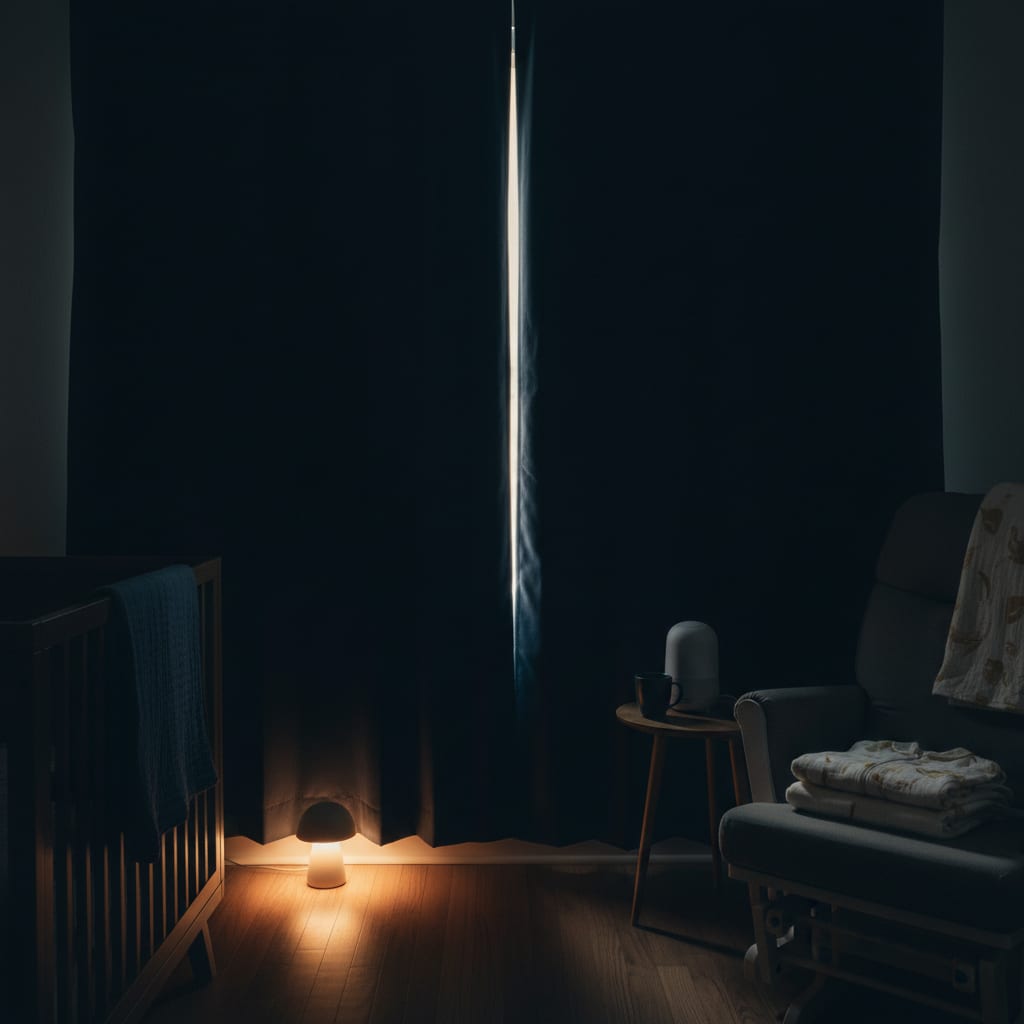
Blackout curtains earn their reputation: light is the strongest timing signal a baby’s body clock gets, and a room that glows at 7:30pm or brightens at 5:45am is quietly working against every bedtime and early-waking battle in the house. The setup that solves it: genuine blackout coverage on the windows (panels with a sewn-in liner, or a travel solution when you’re away), no white or blue light overnight, and — if a night light is truly needed for toddler fears or feeds — a dim, warm-toned one placed low and away from the crib. Total cost sits well under one consultant hour.
I’m a working sleep consultant, and darkness is the fix I prescribe most often per dollar. Here’s the whole light playbook from my in-home checklist.
Why light hits babies harder than the catalog says
Circadian rhythm runs on light exposure — bright mornings anchor the clock, dim evenings let melatonin rise. That’s established sleep science (the parent-friendly version is well covered at sleepfoundation.org), and the practical baby translations are two: an evening room that’s still bright makes bedtime biologically premature, and a summer sunrise through thin blinds is a standing 5am alarm. In consults, the pattern I see is “early waking” cases that are really “east-facing window” cases — solved by fabric, not methods. Hedge stated plainly: darkness won’t fix hunger, illness, or a wrong schedule; it removes the environmental vote against you. (And persistent sleep changes with no obvious cause are pediatrician territory before they’re shopping territory.)
The main fix: real blackout at the window
“Room-darkening” is a marketing tier, not darkness — you want blackout, which in practice means a woven liner, not just dark fabric. The inexpensive standard I name for clients is NICETOWN’s 100% blackout curtains with the sewn-in black liner: panels wide enough to overlap the frame generously, hung high, because most light leaks around edges rather than through fabric. Kill the halo with cheap physics — wrap-around rod or side-mounting, panels wider than the window, and a folded towel on the sill for the bottom gap. Target: you walk in at nap time and can’t comfortably read.
Renter and zero-sew fixes: tension rods inside the frame, temporary adhesive blackout film or press-on shades, even foil-and-cardboard for a regression emergency — ugly, effective, reversible. Landlords never need to know.
Travel darkness: the pack-and-play in grandma’s bright guest room is where good sleep goes to die. The category standard is the SlumberPod blackout canopy — a ventilated tent that goes over the travel crib (their guidance: ages four months and up, and follow the manufacturer’s setup rules). A garment bag of blackout fabric and painter’s tape is the budget version; less elegant, often enough for a weekend.
Night lights: the rules I give clients
- Babies don’t need one. Fear of the dark isn’t developmentally on the menu in the first year or so; the night light is usually for the adults. For feeds and diaper changes, dim and warm beats bright and white.
- If you use one: warm and low. Choose red/amber-toned light — the commonly cited reading of the research is that warm tones disrupt melatonin less than white/blue light — placed low, away from the crib, as dim as the job allows.
- For toddlers with real fears, it’s a fair tool. Same warm-and-dim rules; skip anything that doubles as a light show — the popular light-plus-sound machines, like the Hatch Baby, are fine if you use the warm-dim settings and resist the rainbow ones.
- Screens and projectors are not night lights. Moving, bright, entertaining — the opposite of the room’s one job.
And the other half of the light equation is free: bright natural light in the morning and at wake-ups anchors the clock from the other side. Open the blinds hard at 7am; darkness at night works better when daytime is genuinely day. The rest of the room — sound, temperature, safety — is in the full nursery checklist.
What darkness won’t do
A dark room will not sleep-train anyone, rescue a mistimed schedule, or override a growth spurt. I’ve watched families blackout a room to fix a 5am waking that was actually a too-early bedtime — fabric can’t argue with sleep pressure. Environment removes obstacles; timing and consistency do the lifting.
What I’d tell a client
Do the reading test at nap time. If you can read, order real blackout panels (liner, overlap, high mount), towel the sill, and re-test — the whole project is an evening and modest money. Add a warm dim night light only if a human actually needs it, blast the blinds open every morning, and pack darkness when you travel. Then stop buying light-related things; you’re done.
FAQ: blackout and night lights
Do blackout curtains really help babies sleep?
For evening bedtimes and early wakings driven by light — markedly, and it’s among the cheapest interventions in the whole niche. They can’t fix hunger, schedule problems, or regressions; they remove light’s vote, which is often the swing vote.
What color night light is best for baby sleep?
Warm red/amber tones, dim, placed low and away from the crib — the commonly cited research reading is that warm light disturbs melatonin less than white or blue. Best of all, for most babies: none.
How dark is too dark for naps?
For newborns building day-night rhythm, daytime naps in ordinary daylight are fine. Past that stage, there’s no meaningful “too dark” for sleep — if the room unsettles you, add a warm light for the adults during routines and switch it off at lights-out.
How do I keep the room dark when traveling?
A blackout canopy over the travel crib is the purpose-built answer (follow the maker’s age and ventilation guidance), and taped blackout fabric or heavy garbage bags over the window is the budget one. Recreate the sound-and-dark of home and most babies forgive the strange room.