The Nursery Checks a Sleep Consultant Actually Runs
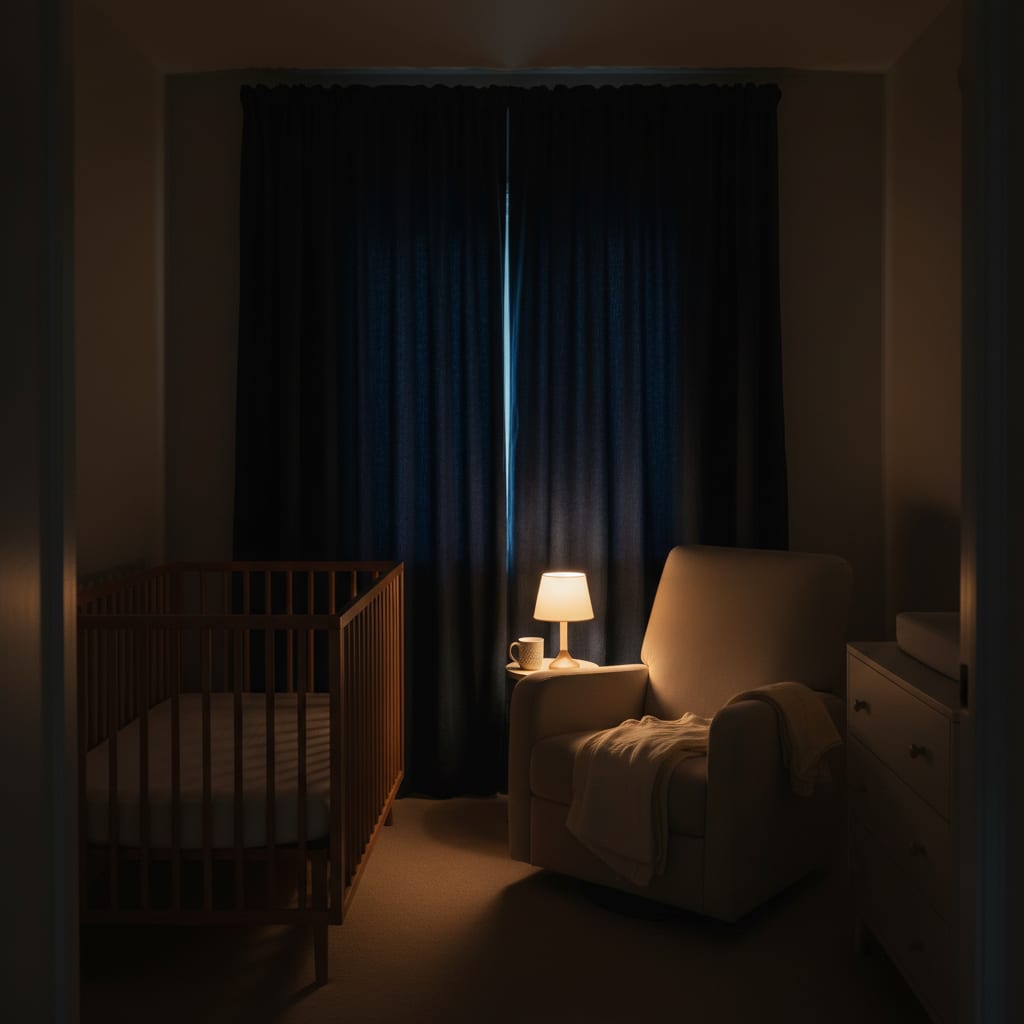
A good baby sleep environment comes down to five checks — dark, quiet-ish, cool, safe, and boring — and when I walk into a client’s nursery, those five explain most of what’s fixable in an afternoon. The consultant version of the checklist: darkness that survives summer evenings, continuous sound masking household noise, a room around the 68–72°F band commonly cited for comfort, a crib that’s bare the way the AAP means bare, and a space that signals sleep rather than stimulation. Almost none of it requires expensive gear; all of it beats buying another gadget.
I’m a working sleep consultant, and the environment walkthrough is the first twenty minutes of every in-home visit — mostly because it’s the cheapest twenty minutes: fixing a bright, hot, exciting room costs less than any package I sell.
Check 1: darkness (the big one)
The single most common environment problem I find is light — a 7:30pm summer bedtime in a room where the blinds glow, or a 5:45am wake courtesy of a June sunrise. Aim for genuinely dark for naps and nights past the newborn stage; if you can read a book in the room at bedtime, it’s brighter than it needs to be. Blackout treatment is the fix, and the worked example I give clients is a proper blackout panel — something like NICETOWN’s 100% blackout curtains with the sewn-in liner, which are the inexpensive standard for a reason. Renter hacks, night-light rules, and travel darkness get their own full write-up in my darkness and light setup guide.
Check 2: sound (masking, not silence)
You’re not chasing silence — you’re masking the dishwasher, the sibling, the delivery truck. Continuous white noise, started at the beginning of every sleep, does that job. The setup rules I give clients: machine across the room from the crib (not at the pillow), volume around a conversational shower-sound — commonly cited guidance keeps it roughly 50 decibels at the baby’s ear, about what pediatric hospital nursery standards target — and continuous rather than timed, so it doesn’t cut out mid-sleep-cycle. The worked example: a fan-based classic like the Yogasleep Dohm, which has been the boring, durable answer for decades. For a full head-to-head of the options, our gear-review sibling site has the verdicts: best white noise machines at onlymomreviews.
Check 3: temperature and dressing
Cooler than most nurseries run. The commonly cited comfort band is roughly 68–72°F; overdressing is the more frequent miss — I meet a lot of babies sleeping in July fleece. The practical system is TOG-rated sleepwear instead of blankets: a wearable sleep sack matched to room temperature, like the HALO SleepSack micro-fleece for cooler rooms, with lighter cotton versions for warm ones. Check the back of the neck, not the hands — cool hands are normal. Sack-by-sack comparisons live with our review sibling: best sleep sacks at onlymomreviews.
Check 4: safety (the non-negotiable check)
This one isn’t mine — it’s the AAP’s, and I just repeat it in homes: baby on the back, on a firm flat mattress, in a crib or bassinet that’s bare — no blankets, pillows, bumpers, stuffed animals, or positioners. Two products I get asked about and will not link: weighted sleep sacks and swaddles (the AAP’s 2022 safe-sleep policy recommends against weighted products entirely) and crib bumpers, which are now banned from sale in the US. When gear marketing and healthychildren.org disagree, the AAP wins, every time. And any breathing, positioning, or medical question about sleep setup goes to your pediatrician before it goes to any store or any consultant.
Check 5: boring (the underrated one)
Mobiles over the crib, light projectors, toys within reach, a crib that doubles as a playpen all afternoon — stimulation where you’re asking for sleep. The crib’s job description is short. Keep the interesting stuff out of sightlines, run wind-down in low light, and let the room mean one thing. (If the room is right and nights are still chaos, the problem usually isn’t the room — check the timing gates before checking the shopping list again.)
What I’d tell a client
Spend one afternoon and under $100: blackout the window, set a fan-based sound machine across the room at shower-volume, drop the thermostat toward 68–70, strip the crib to AAP-bare, and evict the entertainment. That’s eighty percent of what an in-home consultant’s environment audit finds, and it’s the twenty percent of spending that does the work. Everything else in the catalog is optional.
FAQ: baby sleep environment
What should a baby’s room temperature be?
The commonly cited comfort range is about 68–72°F; err cooler and adjust clothing with TOG-rated sleepwear rather than blankets. Judge by the back of the neck, and take persistent temperature worries — especially with fever or illness — to your pediatrician.
How dark should the nursery be?
For naps and overnight past the newborn weeks: dark enough that reading is hard. Newborns don’t need daytime naps in darkness while day-night rhythm is forming; once schedules matter, darkness is your cheapest sleep aid.
Is white noise safe for babies all night?
Used sensibly — machine across the room, moderate volume around the commonly cited ~50 dB mark, continuous rather than blasting — it’s widely used and considered reasonable. Skip pillow-adjacent speakers and max volume, and ask your pediatrician if you want a ruling for your specific setup.
What does a baby actually need in the crib?
A firm mattress, a fitted sheet, and the baby in appropriate sleepwear. That’s the whole AAP list — no bumpers, blankets, pillows, weighted anything, or toys. Bare looks austere and sleeps safe.