Getting a Baby to Sleep in the Crib: A Staged Plan
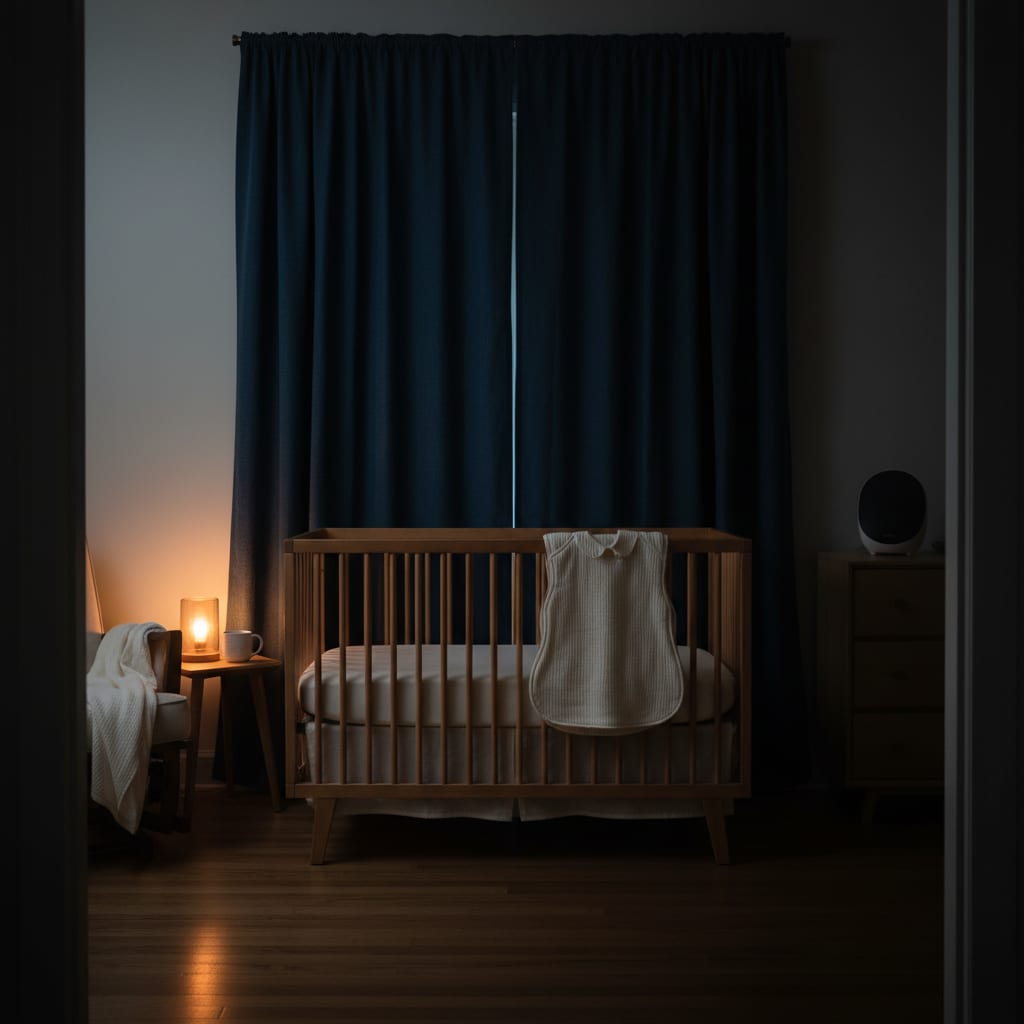
Do it in stages over roughly a week, and change one thing at a time. The crib is bigger, flatter and less enveloping than whatever the baby is leaving, so the transition is mostly about carrying over everything that was familiar — the same sleepwear, the same sound, the same darkness, the same order of events — while the surface changes underneath. Naps go first, nights follow, and the room-sharing question is separate from the furniture question. Most families are through it in five to seven nights.
I’m a working sleep consultant, and the mistake I see most often is doing the crib, the room and the swaddle exit in the same 24 hours, then concluding the crib was the problem.
Decide what is actually triggering the move
There are two different moves wearing the same name, and they need different amounts of urgency.
A safety-triggered move — your baby is pushing up on hands and knees, showing signs of rolling, or has hit the bassinet’s stated limit — happens now, tonight, imperfectly. The limits are worth reading before you are in that position; they are set out in how long a bassinet lasts.
A convenience-triggered move — you want your room back, or you are tired of the bassinet’s transfer height — can be scheduled. Pick a week with no travel, no immunisations, no teeth actively coming through, and nobody starting daycare.
Stage 1: make the crib familiar before it is a bed
For two or three days, the crib is a place things happen in daylight. Nappy changes at the crib rail, a few minutes of floor-level play beside it, one contained awake stint in it while you fold laundry in the same room. You are not training anything; you are removing novelty.
At the same time, get the room right before you need it to work at 3am. Blackout matters more in a crib than in a bassinet, because the crib is usually further from you and the wake-ups are now solo. The setup, including the night light question, is in darkness and night lights — get the room to the standard you want before the crib has to prove itself in it.
Stage 2: naps before nights
Start with the first nap of the day, which usually has the strongest sleep drive and the least accumulated resistance. Give it two or three days. If the first nap works, add the second.
Expect the first crib naps to be short. A 30-minute crib nap on day one is not a failure; it is a baby who woke at a cycle transition in an unfamiliar room and did not know where to put himself. Do not chase it by adding a new soothing habit you will have to unpick later.
If naps stay under half an hour for a solid week and the mood is deteriorating, back off to one crib nap a day and hold there rather than escalating.
Stage 3: the first nights
Move nights once one or two naps are reliably happening in the crib. Keep everything else identical: same bedtime, same routine order, same sack weight, same sound at the same volume and distance.
Sit the first three nights out with low expectations and a plan for wake-ups you have decided on before bedtime. Whatever your settling approach is — and this site reviews the whole menu in methods compared — a transition week is not the week to change it. Use the one you already use.
If you are also moving from your room to a separate one, do it as a second step a week later, not the same night. Two variables, two weeks.
Stage 4: the 2am decision, made in advance
The predictable failure point is the first middle-of-the-night waking, when the crib is new and you are unslept and the bassinet is still standing there. Decide in daylight what you will do, and write it on a sticky note if you have to.
A workable default: respond as you normally would, settle in the crib rather than lifting where you can, and if you do lift for a feed, return to the crib afterwards. If a night goes badly enough that everyone needs to sleep, use your fallback once and go back to the plan tomorrow. One rescue does not undo a transition. Six do.
Where this usually stalls
Three stalls account for most of what I see. The first is a swaddled baby moved to the crib and unswaddled in the same week — separate those by at least seven days unless rolling forces the swaddle out, in which case the swaddle wins and the crib waits.
The second is a room that was never actually dark or quiet, so the crib is being blamed for a 5am sunrise. The third is a schedule that had drifted before the move and is now visible: a baby fighting the crib at 7pm may simply not be tired yet, and the same baby fighting it at 8pm may be well past their limit. If the sleep was already unravelling before the move, start with what I check when sleep training isn’t working instead.
What I’d tell a client
Give it seven nights before you judge it, and change nothing else during those seven nights. Nearly every crib transition that gets described to me as a disaster turns out to be three changes stacked on top of each other, and the crib is just the one that was visible. Keep the sleepwear, the sound and the routine identical so the only new thing in the baby’s night is the size of the space. And be honest about which kind of move this is: if it is a safety move, it happens tonight and you accept a rough week; if it is a convenience move, you get to choose a good week and you should use that privilege.
FAQ: moving to the crib
At what age should a baby move to a crib?
There is no fixed age. The trigger is the bassinet’s limits — the manufacturer’s number, or the baby rolling or pushing up on hands and knees — which lands most families somewhere between three and six months. A baby can also go straight into a crib from birth.
Should the crib be in my room or the nursery?
Safe-sleep guidance favours room-sharing on a separate surface for at least the first six months, and a crib in your room satisfies that as well as a bassinet does. Treat the room move as a separate step from the furniture move.
Why does my baby sleep in the bassinet but scream in the crib?
Usually space and familiarity rather than the crib itself: more room around the body, a different surface, and often a different position in the room relative to the door and window. Carry the sleepwear, sound and routine across unchanged, and give it a week of naps first.
Do I need a crib bumper or a soft mattress to make it cosier?
No, and neither is safe. The crib stays flat, firm and empty — fitted sheet only — and the warmth goes on the baby in the form of a sack rather than into the space. Padded, mesh and “breathable” bumpers are all in the same bin.