Sleep Training When a Parent Can't Lift at Night
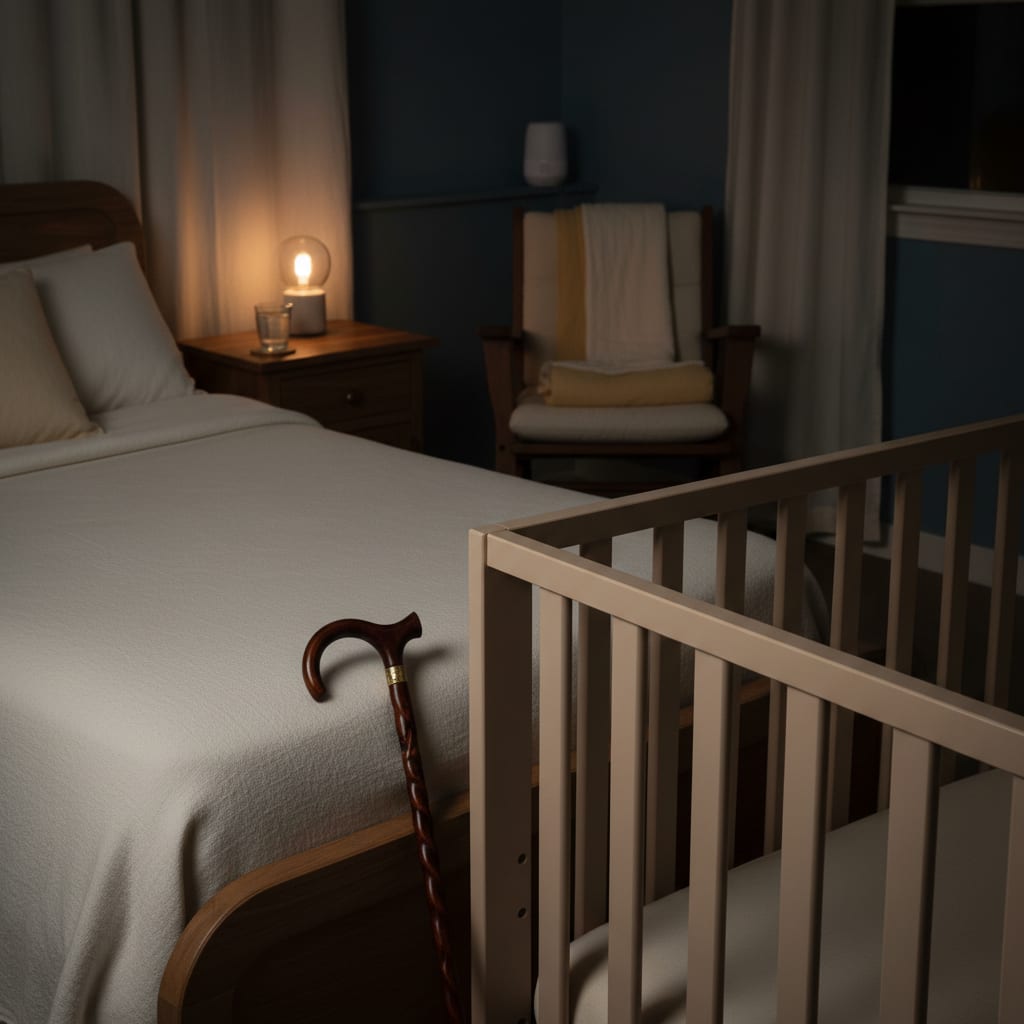
Choose the plan by how many lifts it demands, not by how gentle it sounds. If pain, fatigue, a flare, a wheelchair or a healing surgical site limits how often you can pick your baby up at night, that limit is the first input, not a complication to solve later. Three decisions come before any method: where the baby sleeps relative to your bed, who does the transfers that remain, and which settling routine works from beside the crib rather than from your arms. Safe sleep bends for none of it.
I make my living in this industry, so the honest edge first: none of this needs a paid plan.
Start with the transfer count, not the method
Count the lifts on an ordinary night: bedtime into the crib, every waking you attend, every feed with a transfer at either end, morning out. Write that number, then the number you can repeat at 3am on a bad day rather than a good one. The gap between the two is the design brief.
In consults, the pattern I see is a family choosing a method by its label — gentle or not — when the variable deciding whether they can run it is how many times it puts the baby back in their arms. The target is not zero lifts; it is a number that survives your worst night.
The safe-sleep line that does not move
Everything below is adjustable. This is not: back, own flat firm surface, nothing soft in with them, and the AAP’s line on “keeping your baby’s sleep area in the same room (but not in the same bed) where you sleep for at least the first 6 months.” Room-sharing is convenient as well as safer here — a baby within reach is one you are not crossing a landing for.
One trap belongs specifically to this household: a parent who finds getting out of bed slow and painful ends up feeding in a chair or on the sofa at 2am and falling asleep there. The AAP puts that at “up to 67 times higher” risk of sleep-related infant death — someone sleeping with an infant on a couch, soft armchair or cushion. If there is a real chance you will fall asleep mid-feed, feed where nothing can cover the baby: “make sure there are no pillows, sheets, blankets or any other items that could cover your baby’s face, head and neck.” Clear the bed beforehand, and return the baby to their own surface.
Methods ranked by how much lifting they demand
This is the triage the general comparison of sleep training methods does not run, so run it here.
Highest load: pick up put down. The repeated lifting is the method, not a side effect you can trim out, so for most parents here it is off the table — better said now than found on night two.
Middle: the chair method keeps the baby in the crib while you stay near and stay put, so the transfer count is low by design. The cost is long sessions, and a chair you can get out of repeatedly.
Lowest: timed checks of the Ferber kind, where a visit is voice, presence and at most a hand on the mattress — no lift is built into the design. Bedtime-routine fading is lower still — it changes what happens before sleep, not after a waking.
The part a marketing page leaves out: the low-lift end is also the end with more protest early on. It is a trade, not a free win — and declining the category is legitimate. A flare, a medication change, a hospital week and a new diagnosis all belong on the postpone list in when not to sleep train.
Setting the room up so fewer lifts are needed
Height is the cheapest change. A sleep surface at bed height with a side wall that lowers turns a lift-and-carry into a slide across; on a swivel model like the HALO BassiNest Swivel Sleeper 3.0 the lowering wall is the feature that matters, not the vibration. Whether you need a bassinet at all is answered in onlymomreviews’ do you need a bassinet.
In a crib, keep the mattress at the highest setting the baby’s stage allows and drop it the moment they can push up or pull to stand — a safety rule, not an ergonomics one, and it overrides your back. Then keep everything a waking needs within reach of where you sit — most extra trips I see are for a sleep sack, water or medication, not the baby.
Who does the lifting that is left
Split the night by task, not by hours: one adult owns transfers, the other everything doable seated or from bed. Whole-night blocks beat taking turns — a body managing chronic illness needs consolidated sleep more than a fair split.
Solo, the free version of paid overnight support is a rota of family or friends taking one night a week, and the ask lands better specific: one night, this date, transfers only.
The referral almost nobody is offered is occupational therapy for baby care itself. Through the Looking Glass describes designing “adaptive equipment (such as a lifting harness and adapted cribs)” and therapists who “provide specific techniques, strategies, and equipment” around each family’s goals. Its free equipment is tied to its own region, so the transferable move is to ask your clinician for an OT referral about baby-care technique and equipment.
Medication, flares and the nights you don’t run a plan
Bed-sharing looks like the obvious answer and is the wrong one, for a chemical rather than a moral reason: the AAP’s figure is that risk is “more than 10 times higher for babies who bed share with someone who is fatigued or has taken medications that make it harder for them to wake up.”
Decide the flare protocol in advance, on a good day — which parts pause, who is called, what the fallback night looks like. A plan with a written pause outlasts one abandoned mid-week. And the line I do not blur: your pain, breathing and medication go to your own clinician, anything about the baby is a pediatrician conversation, full stop. Sleep consultant is a job title, not a clinical qualification.
Where an app helps, and where it doesn’t
The genuine help is upstream: fewer wakings means fewer transfers, and the schedule is the lever that moves wakings. A plan-first tool like Betteroo, at roughly twenty to thirty dollars a month, rebuilds an age-matched schedule, and its read on the baby who wakes every hour is a sensible first stop. If you would rather log and analyse than be handed a plan, Huckleberry is the stronger tracker and I will not pretend otherwise.
The limit, since I am the one recommending the category: every plan generator, Betteroo included, assumes an adult who can pick the baby up whenever the plan says so, and none will flag the step you cannot perform. That translation is yours, or a consultant’s.
What I’d tell a client
Count your lifts before reading another method. Rule out anything built on repeated transfers, and choose from the low-lift end knowing the trade. Get the sleep surface to bed height, and write the flare protocol while you feel well. Never solve a hard night by falling asleep with the baby in a chair.

FAQ: night parenting with a chronic illness or disability
Can you sleep train if you can’t pick your baby up?
Yes. Timed checks and bedtime-routine fading are built around presence rather than lifting, and the chair method keeps the baby in the crib throughout. Pick up put down is the one method that cannot be adapted.
Is bed-sharing safer than getting up when lifting is painful?
Not when medication or fatigue is in the picture, per the AAP figure above — a separate surface at bed height solves the same problem without that trade.
What’s the safest way to feed at night if I might fall asleep?
Not in a chair or on a sofa — the highest-risk version by a wide margin. Clear the adult bed of pillows and bedding first, and return the baby to their own flat firm surface after.
Should I tell a sleep consultant about my condition before booking?
Yes, in the first message. A consultant who redesigns the settling step around your limit is worth hiring; one who says push through it has exactly one plan.