How to Dress a Baby for Sleep: Room Temp and TOG
Aim for a nursery around 68–72°F (roughly 20–22°C), then dress to the room rather than to the season, using a TOG-rated sleep sack instead of loose blankets. That’s the whole system. TOG is simply a warmth rating: higher numbers mean more insulation, so a warm room wants a thin 0.5 sack and a cold one wants a padded 2.5. Almost every dressing mistake I see in homes is in the same direction — too many layers, not too few — and overheating is the risk safe-sleep guidance actually warns about.
I’m a working sleep consultant, and dressing is the cheapest variable in the room and the one families most often get backwards. Nobody ever calls me because the baby was slightly cool.
The temperature band, and where to measure it
The commonly cited comfort range for infant sleep is about 68–72°F. Treat it as a band rather than a target: the guidance that matters is avoid overheating, not hit a number. A degree either side of the range is not a problem. A nursery at 78°F with a fleece sack on is.
Where you measure changes the answer more than most people expect. Warm air rises and floors run cool, so a hallway thermostat and a monitor mounted high on a wall are both reading a warmer, different place than the mattress. The number you want comes from a cheap sensor at roughly crib height, and our gear-review sibling has tested that specific problem properly: nursery temperature at onlymomreviews.
If the room genuinely won’t come down in summer, the levers are the boring ones — cross-ventilation during the day, blackout treatment that also blocks solar gain, a fan moving air across the room rather than onto the baby, and fewer layers. If it won’t come up in winter, add TOG rather than blankets.
The TOG chart, in plain terms
TOG stands for thermal overall grade, and sleep sacks are sold in a handful of standard weights. This is the mapping most manufacturers publish, and it’s a sensible starting point rather than a rule:
| Room temperature | Sleep sack | What goes underneath |
|---|---|---|
| 80°F+ (27°C+) | 0.2 TOG, or nothing but a nappy in a very warm room | Short-sleeved bodysuit, or nappy only |
| 74–79°F (23–26°C) | 0.5 TOG | Short-sleeved bodysuit |
| 69–73°F (21–23°C) | 1.0 TOG | Short-sleeved or long-sleeved bodysuit |
| 61–68°F (16–20°C) | 2.5 TOG | Long-sleeved bodysuit, or a footed sleepsuit |
| 60°F and below (15°C-) | 3.5 TOG | Long-sleeved bodysuit plus a footed sleepsuit |
Two things to know about that table. First, TOG is not standardised the way a shoe size is, so a 1.0 from one brand can feel heavier than a 1.0 from another — use the chart printed on the sack you own. Second, it assumes an otherwise well baby in an ordinary room; a feverish baby, a very young newborn, or a premature baby is a conversation with your pediatrician, not a chart lookup.
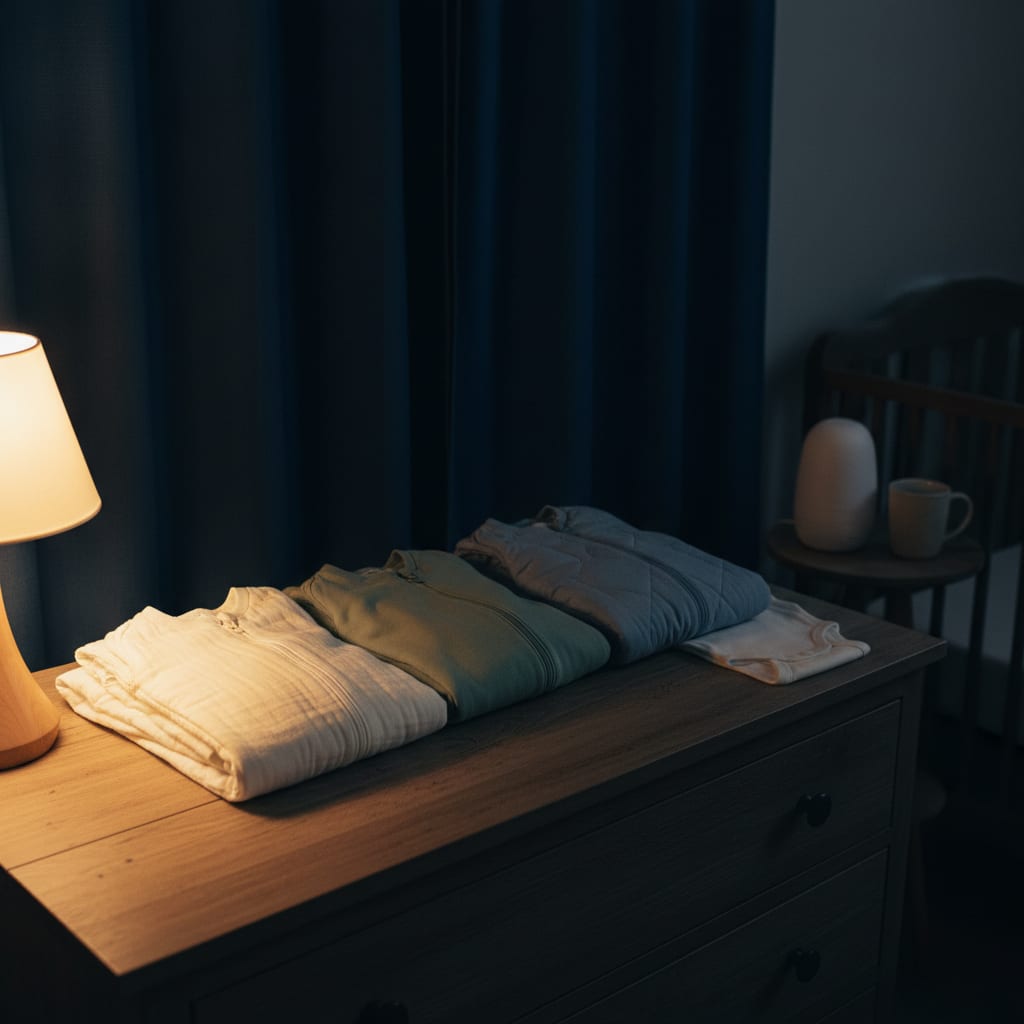
The worked example I give clients is a plain wearable blanket in two weights — something like the HALO SleepSack micro-fleece for cooler months, with a cotton or muslin version for warm ones. Two sacks, bought once, cover an entire year. If you want them compared properly before buying, the head-to-heads live with our review sibling: best sleep sacks at onlymomreviews.
How to tell if you got it right
Check the back of the neck or the chest, not the hands or feet. Cool hands and cool feet are normal in babies and are not a signal to add a layer — circulation to the extremities is simply different, and the number of extra layers added in this country on the evidence of a cold foot is genuinely large.
Signs of a baby who is too warm are the ones worth knowing: damp hair or a sweaty neck, flushed cheeks, rapid breathing, skin that’s hot to the touch on the torso. If you find those, take a layer off. If your baby has a fever or you’re worried about their temperature for any reason, that’s a pediatrician call rather than a wardrobe adjustment — a hot baby is a symptom before it’s a dressing problem.
The rules I don’t bend
No loose bedding. Blankets, quilts, duvets, pillows and positioners don’t go in the crib. A wearable sack exists precisely so a baby can be warm without anything loose around them, which is why it’s the tool rather than a nice-to-have.
No hats indoors. Babies shed a lot of heat through the head, and a hat at sleep is a well-documented overheating route. Hats belong outside.
No weighted sacks or swaddles. I won’t link them and I don’t recommend them. The AAP’s safe-sleep guidance advises against weighted sleep products, and that settles it for me regardless of what the marketing says. Same answer for crib bumpers, which are no longer legal to sell in the US anyway.
Swaddles come off when rolling starts. Once a baby shows signs of rolling, arms come out — a sleeveless sack in the matching TOG is the straightforward swap. If you’re unsure about timing for your baby, ask at the next well visit.
The whole safe-sleep frame lives with healthychildren.org, and where a product’s marketing and the AAP disagree, the AAP wins.
What temperature can and can’t do
In consults, the pattern I see is a family who has been fighting an early-morning waking for a month, and it turns out the heating comes on at 5am in a room that was already fine. Fixing that is one thermostat schedule and free. Equally, I’ve watched families re-dress a baby three times a night chasing a problem that was a bedtime forty minutes too late.
Temperature belongs in the same category as darkness and sound: it removes an obstacle. It does not train anyone, and it will not out-argue a mismatched schedule. If the room is right and the nights still aren’t, the answer is upstream — the full nursery walkthrough covers the other checks, darkness is usually the bigger lever, and white noise setup is the third. Betteroo publishes a plain-language nursery temperature explainer if you want a second read on the same numbers.
What I’d tell a client
Put a cheap sensor at crib height, find out what the room actually does overnight rather than what you assume, and buy two sleep sacks — one light, one warm — instead of a drawer of blankets. Dress to the reading, check the chest not the hands, and take a layer off before you add one. That’s an evening’s work and under fifty dollars, and it closes the temperature question for the whole first year.
FAQ: room temperature and baby sleepwear
What is the ideal room temperature for a baby?
Roughly 68–72°F (20–22°C) is the commonly cited comfort band. The guidance that matters more than the exact figure is to avoid overheating, and to measure at crib height rather than trusting a hallway thermostat or a wall-mounted monitor.
What TOG should my baby wear?
Match the sack to the room: about 0.5 TOG above 74°F, 1.0 TOG around 69–73°F, and 2.5 TOG in a cool room of 61–68°F, with a bodysuit or sleepsuit underneath as the chart above sets out. Follow the chart printed on your own sack, since TOG is not standardised between brands.
How do I know if my baby is too hot at night?
Feel the back of the neck or the chest — hands and feet run cool normally and aren’t a useful signal. Damp hair, a sweaty neck, flushed cheeks or a hot torso mean take a layer off. Fever or any temperature worry is a pediatrician question.
Can my baby sleep with a blanket?
Not in the first year. Loose bedding doesn’t belong in a crib under safe-sleep guidance, which is exactly the problem a TOG-rated wearable sack solves — the warmth stays on the baby and nothing is left loose around them.