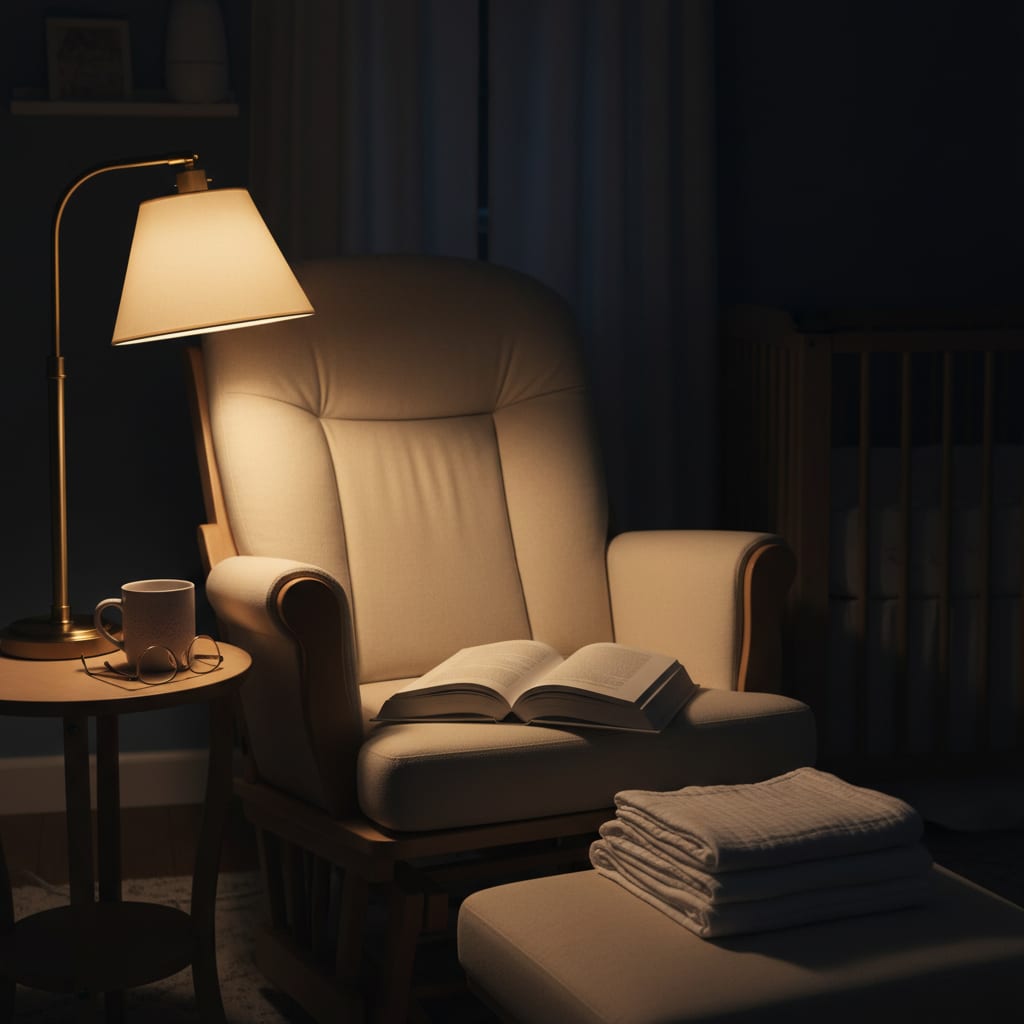
How to Put a Baby to Sleep in 40 Seconds: Checked
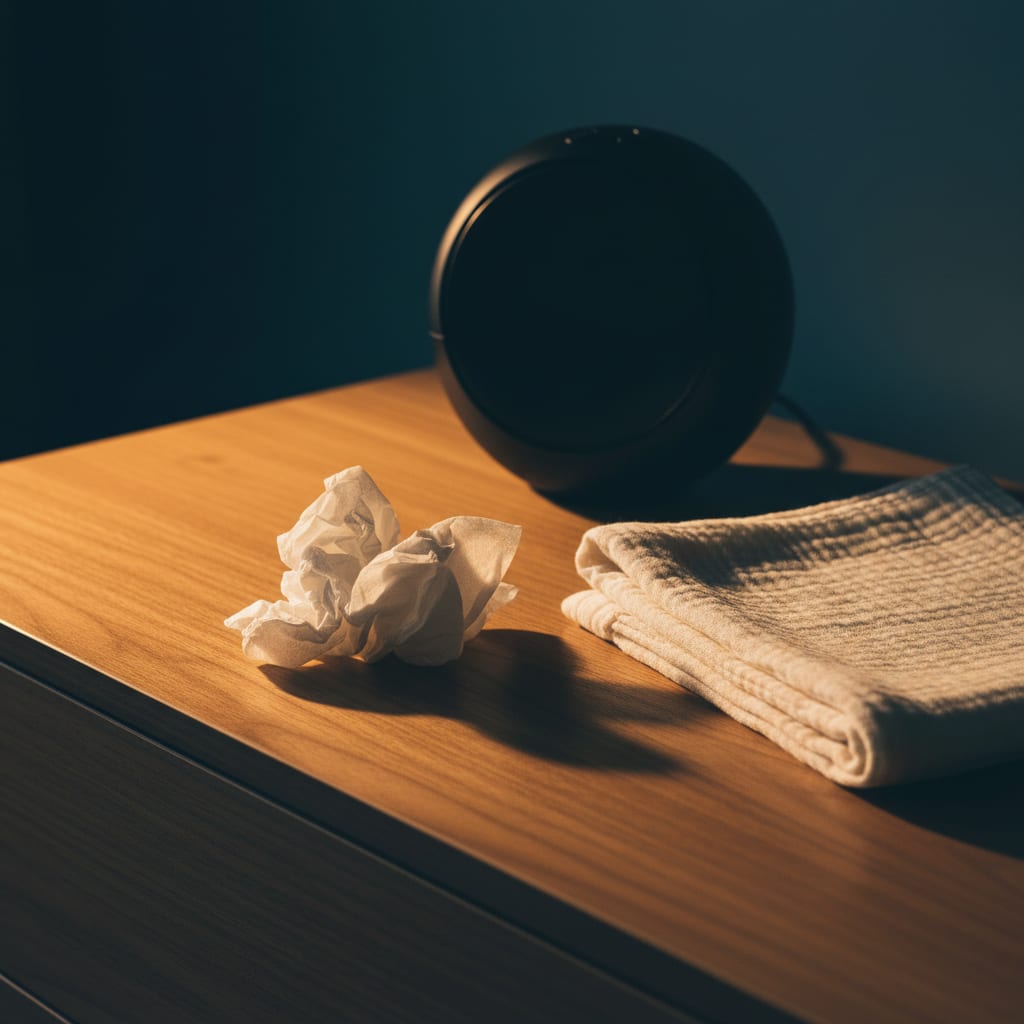
The short answer: the trick is real in the sense that it happened on camera, and it is not a method. Stroking a baby’s face lightly with a tissue is a soothing cue — gentle repetitive touch genuinely calms infants, and there is decent laboratory evidence for that — but a cue only closes the last few seconds of a gap that timing has already closed for you. On a baby who is drowsy and unstimulated, it can look like magic. On a baby who is overtired, hungry, or not tired at all, it does nothing, and the failure tells you nothing about your baby.
I’m a working sleep consultant, so I have a commercial interest in you believing sleep is complicated. It usually is. This particular thing is not, and I would rather say so.
Where the 40 seconds came from
In 2015 a father in Sydney, Nathan Dailo, posted a short video of his three-month-old son Seth falling asleep while he stroked the baby’s face with a soft tissue. It ran about forty seconds, it went to millions of views, and it has been recycled into listicles ever since. Dailo himself said the tissue was not the point — that any light touching around the forehead works the same way. That is the most accurate sentence anyone has written about it, and it is the one the listicles drop.
Worth noting what the video is not: it is not a controlled test, there is no comparison against putting the same baby down without stroking, and we have no idea what the rest of that night looked like.
What the tissue is probably doing
Skin has a class of slow nerve fibres that respond specifically to light, moving touch — not pressure, not temperature, movement at roughly the speed a person instinctively strokes a baby. Stimulating them appears to be genuinely calming, which is the same mechanism people reach for to explain why infant massage and skin-to-skin contact work.
So the plausible read is: the tissue is a delivery device for slow stroking at about the right speed, aimed at a patch of skin that is easy to reach. Nothing about the tissue is special. A fingertip does the same job, and a fingertip cannot end up in a crib.
The evidence, stated precisely
Here is where the internet overstates it. There is real published work on gentle stroking in infants: a 2018 study in Current Biology from an Oxford-led group (Gursul and colleagues) stroked newborns at about 3 cm per second before a painful procedure and measured less pain-related brain activity than at a faster, non-optimal speed. Sixty-two infants, term babies, careful design.
That is a pain result, not a sleep result. Sleep was not measured. Nobody has shown that face-stroking with a tissue shortens sleep onset, and no study I can find has tried. So the honest statement is: light stroking measurably changes how a newborn’s brain responds to something unpleasant, and it is entirely reasonable to think that a calmer baby settles faster — but “reasonable to think” is not the same as “shown,” and a forty-second video is not evidence of anything except that it worked once.
Why it works for some babies and not for yours
The variable nobody controls in these videos is the state the baby was already in. A three-month-old who is fed, warm, unstimulated and inside the right wake window is going to fall asleep in the next few minutes regardless of what you do with your hands. Add a rhythmic cue and it happens now instead of in four minutes, and it looks causal.
Run the same cue on a baby whose last wake window went ninety minutes long and you get a stiffening, a swat, and a louder cry — because face-touching an overtired baby is stimulation, not soothing. That is not your technique failing; the state was wrong. The rescue sequence for that state is a different job, and I’ve written it up in getting an overtired baby to sleep.
Temperament matters too. A meaningful share of babies dislike face contact, full stop, and will always dislike it.
The safe-sleep footnote nobody adds
Two rules I would want stated before anyone tries this, because the listicles never do.
A tissue is a loose object, and loose objects do not belong in a sleep space. Use it while you are holding the baby or standing over the crib with your hands on them, awake and watching — then take it away with you. Nothing goes in the crib but the baby, a fitted sheet and a firm flat mattress. And never place anything over a baby’s face, even briefly, even as a joke; the stroke goes from forehead down toward the nose, and the tissue stays visible in your fingers the whole time.
If your baby is congested, snoring most nights, or breathing effortfully, park the whole question and talk to your pediatrician. Nothing on this page substitutes for that.
What it is actually good for
I do use light stroking with clients, just not for the reason the videos suggest.
As the last step of a wind-down. A predictable, boring physical cue in the final thirty seconds before the crib gives a baby something to associate with sleep onset that you can reproduce identically every single night. Consistency is the active ingredient; the tissue is the packaging.
As a diagnostic. If a slow stroke settles your baby in under a minute, you have learned something useful: the problem tonight was arousal, not tiredness or hunger. If it makes things worse, you have learned the opposite. Either way you know more than you did.
As the low-cost end of a bigger choice. If you are weighing whether to change how sleep begins at all, that decision belongs alongside the real options rather than next to a hack — the gentle end of which I’ve compared in no-cry sleep methods, and the whole field in sleep training methods compared.
What I’d tell a client
Try it. It costs nothing, it cannot hurt a supervised, awake baby, and it may well shave a few minutes off a bedtime. Then hold it to a fair standard: judge it over a week of ordinary nights, not against a video of somebody else’s baby on somebody else’s good evening. If it works, you have a nice cue and no obligation to buy anything. If it doesn’t, the thing to examine is the wake window before bedtime, not your stroking technique. And treat every “in X seconds” headline the way I do — as a claim about one baby, one time, filmed by someone who was delighted.
FAQ: the 40-second sleep trick
Does the tissue trick actually work?
Sometimes, on a baby who is already close to sleep. It is a soothing cue rather than a method, and there is no published study showing it shortens sleep onset.
Is it safe to stroke a baby’s face with a tissue?
While you are awake and holding or supervising them, yes — keep it away from the mouth and nose and never leave it in the sleep space. Loose objects do not belong in a crib.
What age does it work best at?
The original video was a three-month-old, and young infants are the easiest to soothe with rhythmic touch. Older babies increasingly find face contact stimulating rather than calming.
Why does it make my baby cry instead?
Usually because they were overtired or overstimulated when you tried it, in which case extra sensory input pushes the wrong way. Some babies simply dislike face touch and always will.