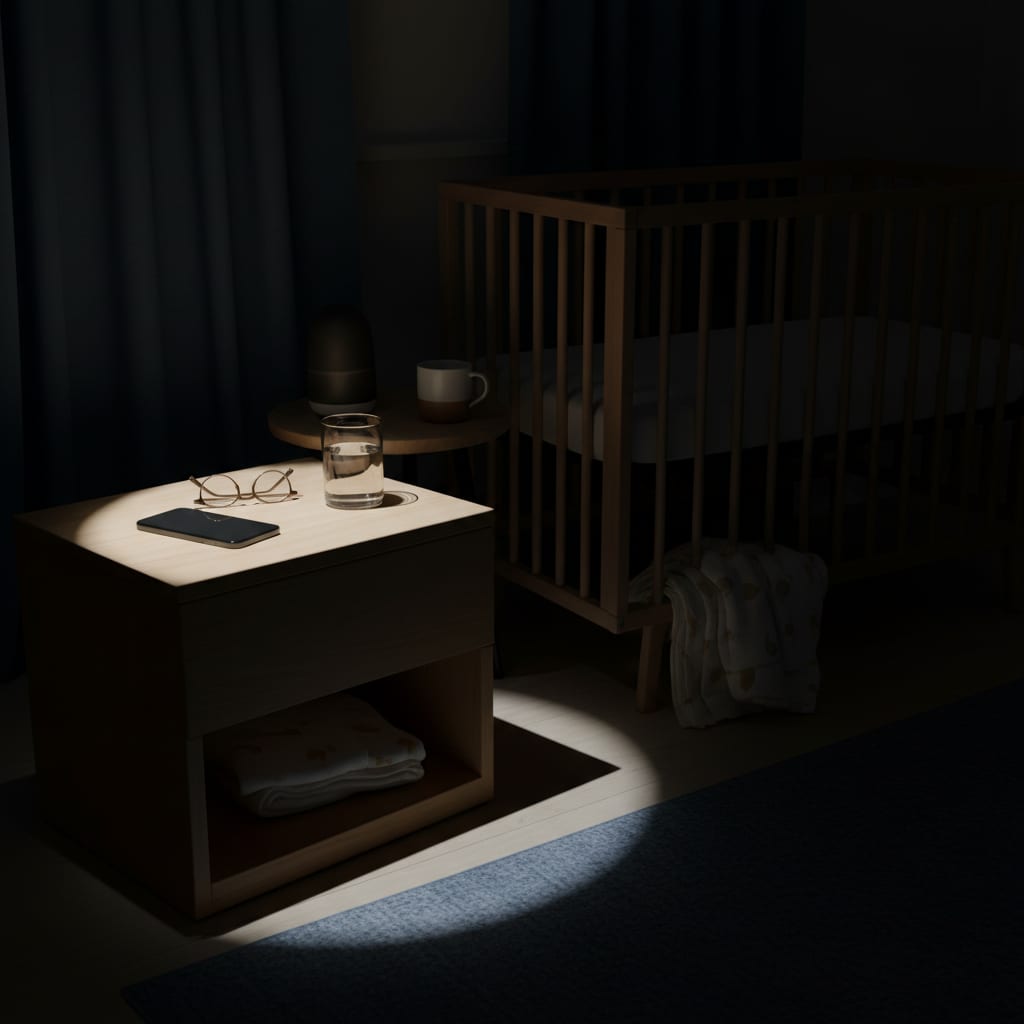
When Can a Baby Sleep on Their Stomach?
Place your baby on their back for every sleep, naps included, for the whole first year. That part does not bend. What does change is what you do after they get there themselves: once a baby can roll independently from back to tummy and from tummy to back, you don’t have to keep flipping them over — you still start every sleep on the back, and then you leave them in whatever position they choose. Rolling commonly shows up somewhere around four to six months, and it arrives on the baby’s schedule rather than yours.
I’m a working sleep consultant. This is the question that wakes parents up at 2am to stand over a crib, and the answer is more reassuring than the 2am version of it feels.
The short answer, in two halves
Half one: you always place them down on their back. Not on the side, not propped, not at an angle. That instruction covers every sleep in every location for the first twelve months.
Half two: you are not required to maintain that position all night once they can move themselves out of it in both directions. A baby who can roll back to tummy and tummy to back has the neck strength and the motor control that the recommendation is protecting against not having. Both directions is the test, and it’s worth actually watching for rather than assuming — plenty of babies get to tummy weeks before they can reliably get back.
The full framing lives with the AAP’s safe sleep guidance and the NICHD’s Safe to Sleep materials, and where a product’s marketing disagrees with those, they win.
Once rolling starts: what changes
Practically, almost nothing except your night. You go on putting them down on their back. You stop resetting them, which means you stop lying awake listening for the roll. If you find them face-down, you leave them face-down.
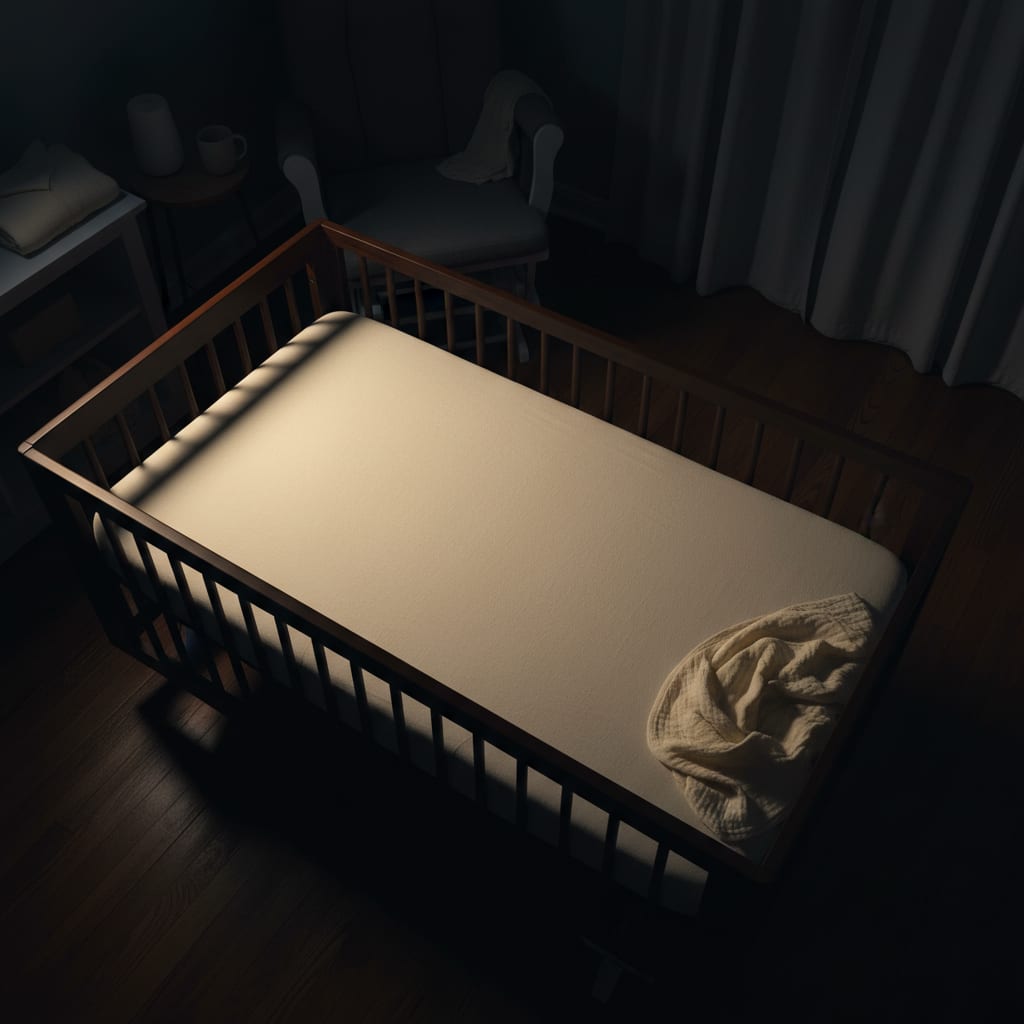
What has to change is the crib, because a baby who moves is a baby who can reach things. That means the surface is firm and flat, the sheet is fitted, and there is nothing else in there — no blankets, pillows, positioners or toys. The reasoning behind each of those is in blankets and the first year. Sleep positioners and wedges are a specific no: they have been the subject of safety warnings, and a rolling baby can end up wedged against one.
Some babies also wake themselves rolling for a week or two while the skill is new. That is a phase, not a regression, and the fix is floor time during the day so the movement stops being novel — not a new settling method.
Swaddles have to come off first
This is the part that catches families out, and it’s the one I’d underline. A swaddled baby who rolls onto their front has their arms pinned and cannot push up. So swaddling stops at the first signs of rolling, not at the first successful roll — the earliest wriggle, the shoulder that lifts, the effort. The straightforward swap is a sleeveless sack in the same warmth, such as a HALO SleepSack.
Expect a rough few nights. Arms-out sleep genuinely is harder at first, and it is still the right call; there is no version of this where you keep the swaddle because the transition is inconvenient. If the timing is unclear for your baby, ask at the next well visit.
Why back sleeping became the rule
Because it was measured. Sudden infant death rates in the US fell sharply in the years after the Back to Sleep campaign began in 1994, and the change in sleep position is the intervention credited with most of it. It is one of the few pieces of parenting advice in the last half-century with that scale of result behind it, which is exactly why it isn’t softened when marketing finds it inconvenient.
The historical version — stomach sleeping was standard advice for a generation — is true, and it’s why your parents will tell you something different. The advice changed because the evidence changed, and this is a case where the newer advice is far better supported.
The setup that makes rolling safe
Empty crib, firm flat mattress, fitted sheet, nothing loose. Sleep in a crib, bassinet or play yard that meets current safety standards, not in a lounger, a car seat at home, an inclined sleeper or an adult bed. Room-share without bed-sharing for at least the first six months if you can.
Then add tummy time while awake and supervised, from the newborn weeks, in small frequent doses. It is not an optional enrichment activity: it builds the neck and shoulder strength that makes rolling — and getting back — possible earlier. Everything else in the room is secondary to this list, and the rest of the walkthrough is in the nursery checklist.
When this is a pediatrician question
Any time you’re worried about breathing, full stop. Noisy breathing, pauses, colour changes, a baby who seems to work at breathing during sleep, or a snore that has appeared and stayed — none of that is a sleep-training topic and none of it belongs with a consultant first.
Also pediatrician territory: reflux (back sleeping is still recommended, and the “sleep them on their front for reflux” advice you’ll hear is not current guidance), any prematurity or medical complexity, a flat spot developing on the head, and a baby who is not rolling at all by the time it’s expected. In consults, the pattern I see is families quietly making a position exception for a symptom that should have been assessed — the exception is never the right answer to the symptom, and the scope-of-practice map sets out who owns what.
What I’d tell a client
Put them on their back every single time, get the swaddle off at the first hint of a roll, and strip the crib to a fitted sheet so that when the rolling arrives you don’t have to do anything. Then stop standing over the crib. Once your baby can get both ways under their own power, a face-down sleeper is a baby in the position they chose, not an emergency, and the flipping you’d be doing is costing you sleep and buying nothing. If anything about their breathing worries you, that’s a call to your pediatrician rather than a change of position.
FAQ: stomach sleeping and babies
What if my baby rolls onto their stomach at night?
If they can roll both ways on their own, leave them. Keep placing them on their back at the start of every sleep and keep the crib empty. If they can only get to their tummy and not back again, roll them over when you notice and get any swaddle off — but don’t sit up all night monitoring it.
At what age can babies sleep on their stomach safely?
There’s no birthday that unlocks it. The trigger is the skill: independent rolling in both directions, which commonly develops somewhere around four to six months. You still place them on their back for every sleep until twelve months regardless.
Will my baby choke if they sleep on their back?
No. Healthy babies on their backs are not at increased risk of choking on spit-up — the airway anatomy protects against it, and this concern has been examined specifically. If your baby vomits frequently or you’re worried about feeding, ask your pediatrician.
Should I stop swaddling when my baby rolls?
Before that — at the first signs of rolling, not the first completed roll. A swaddled baby who ends up face-down can’t use their arms. Swap to a sleeveless sack in the same warmth and accept a few unsettled nights, which is a much smaller problem than the one you’re avoiding.