When to Move Baby to Their Own Room: A Consultant's Take
When to move baby to their own room: the AAP’s six-month room-sharing line, what one study found about sleep, and a consultant’s checklist for the move.
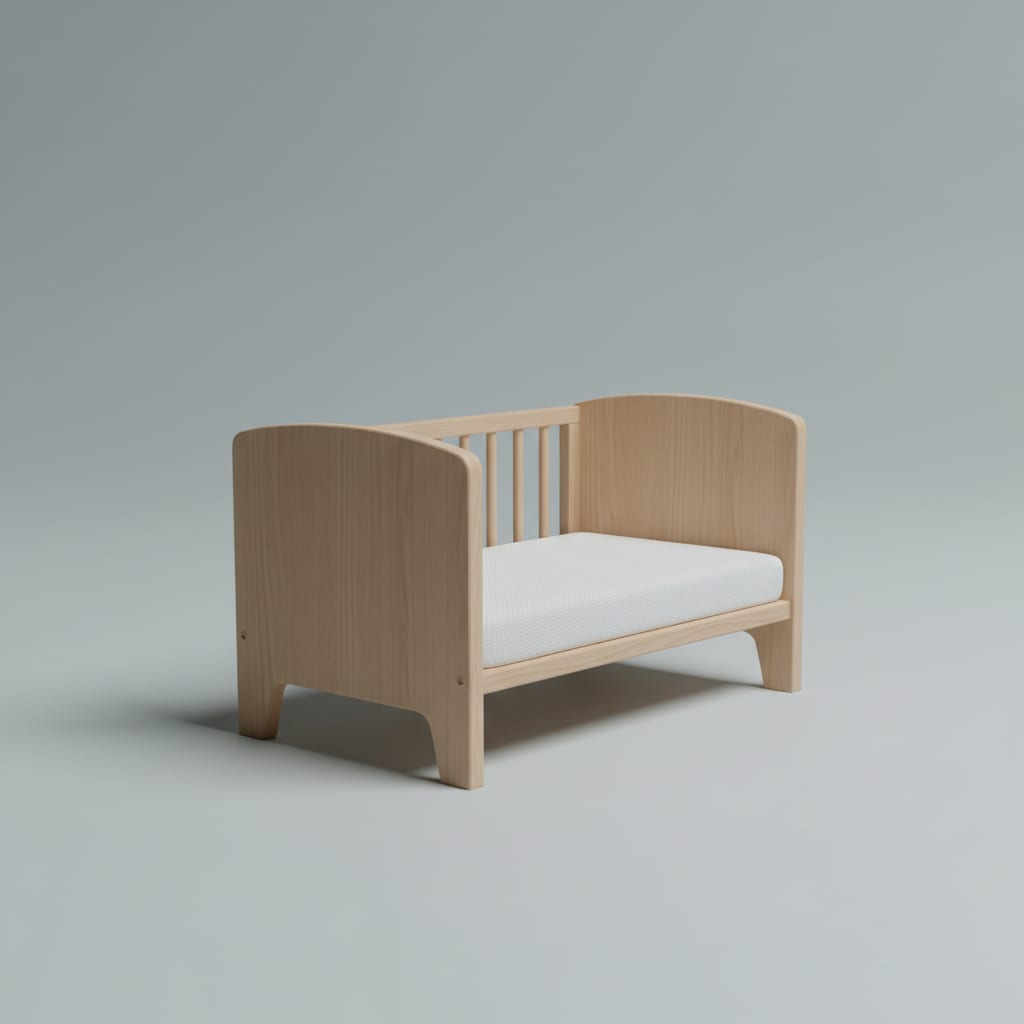
The American Academy of Pediatrics recommends keeping your baby’s crib or bassinet in your room for at least the first six months, so six months is the earliest date to plan around. After that, when to move baby to their own room is a family decision, not a safety deadline. Move when your baby is past six months, the new room meets the same safe-sleep rules as yours, and you have a reason: your sleep, a baby woken by your noise, or a sleep surface that no longer fits beside your bed.
I make my living in this industry, and “when do we move them out?” comes up in almost every consult with a baby past four months. Here is how I answer it.
What the AAP actually says
The AAP’s parents’ guide to safe sleep is direct: “Instead of sharing a bed, share a room with your baby for at least the first 6 months of life.” It means the baby’s own sleep area “in the same room (close to your bed—but not in the same bed) where you sleep.” Its reason is that room sharing “can decrease the risk of SIDS by as much as 50% and it’s much safer than bed sharing.”
Two things follow from that wording:
- Six months is a minimum, not a target. Nothing in the guidance tells you to move a baby at six months. Many families keep room sharing well past it, and that is fine.
- The line is about SIDS risk, not sleep quality. It does not claim babies sleep better in your room. That is a separate question, and the evidence on it points the other way.
What the research says about sleep
The study parents most often bring me is the INSIGHT analysis by Paul and colleagues, published in Pediatrics in 2017 (full text on PMC). Mothers of first babies reported on sleep at several ages. Its findings:
| Finding | What the paper reports |
|---|---|
| At 4 months | Babies already sleeping in their own room “had better sleep consolidation (longest stretch: 46 more minutes)“ |
| At 30 months | Children “sleeping independently by 9 months slept >45 more minutes nightly than those room-sharing at 9 months” |
| Bed-sharing | Room-sharers “had 4 times the odds of transitioning to bed-sharing overnight at both 4 and 9 months” |
| Loose items | Room-sharing babies “had greater odds of having an unapproved object” on the sleep surface |
Read it with its own caveats. The authors write that “the findings we report are correlational, and causal effects cannot be inferred”, and they call the “relatively homogeneous INSIGHT sample” a limitation. Families who move a baby early may differ in other ways from families who do not. So the study does not show that moving a baby makes them sleep longer. It shows that the babies who moved early did, in that group.
It also does not overrule the six-month line. A 46-minute stretch is not worth trading against SIDS risk in the months when that risk is highest. What it does is take away the idea that keeping a baby in your room past six months is free.
Signs the move is worth making
After six months, I look for a reason rather than a date. These are the common ones:
- You are waking each other. Your baby stirs, grunts or rolls, you wake, you check, and your movement or the light from your phone wakes them in return.
- You are responding to noises that are not wakings. Babies are loud sleepers. A parent six feet away answers sounds a parent down the hall would never hear.
- The bassinet is outgrown and a crib will not fit. See my small-room options if your bedroom cannot take a full crib.
- Bed-sharing is creeping in. If a tired 3am “just for a minute” in your bed is becoming a habit, a separate room can make the safe choice the easy one.
- Your own sleep is suffering in a way that matters, for your mood, your driving or your work.
When I would wait
- Your baby is under six months. That is the AAP line and I hold it.
- You are breastfeeding on demand and the walk down the hall would end it sooner than you want.
- You have only one bedroom. The move is not available, and that is fine. Room sharing past six months is safe; it is just not the only option.
- Something big is changing that week, such as a return to work, a new caregiver or travel. Move in a calm week you choose.
- Your pediatrician has a reason to want your baby close, such as prematurity or a breathing concern. That is a pediatrician conversation, full stop.
Setting up the new room
The rules do not loosen because the room changes. Same flat, firm mattress with a fitted sheet, same empty crib, same back-to-sleep. Then the things that differ between your room and theirs:
| Check | Why it matters | What I’d do |
|---|---|---|
| Temperature | A spare room can run colder or hotter than yours | Aim for about 68 to 72°F (20 to 22°C) and dress for it; see my room temperature and sleepwear guide |
| Light | A street-facing room can be bright at 5am | Blackout curtains, such as NICETOWN blackout panels |
| Sound | Without your breathing nearby, household noise stands out more | A steady white-noise machine like the Dohm Classic, set up per my white noise guide |
| Hearing them | You lose the “I’ll hear them” reassurance | An ordinary audio monitor is enough for most families |
| Furniture | Cords and climbable furniture | Blind cords out of reach; nothing the crib can be pulled against |
How the move tends to go
In consults, the pattern I see is that parents dread the first night far more than the baby does. Most babies past six months settle into a new room within a few nights if the room is dark, steady and familiar. Put them down for naps there for a few days first, keep the bedtime routine identical, and expect one or two rough nights rather than a week.
What changes most is the night feed. If you have been feeding in your bed or a chair beside it, decide in advance where feeds will happen now, and make that spot comfortable and safe for a half-asleep parent.
The free version of this advice
You do not need a consultant to decide this. Wait until at least six months, then ask whether either of you is waking the other. If yes, set up the new room to the same safe-sleep standard as yours, match the temperature, darken it, add steady sound, and move on a calm week. If no, there is no rush.
What I’d tell a client
Keep your baby in your room until at least six months; that is the AAP line, and it is about SIDS, not sleep. After that, move when you have a reason, not because a chart says so. If you are waking each other, moving often helps everyone, and the one large study we have is consistent with that, though it cannot prove it. If room sharing is working, keep doing it. Either way, the crib stays bare and your baby goes down on their back.
FAQ: moving baby to their own room
When should you move a baby to their own room?
Not before six months, per the AAP. After that, move when it suits your family: often when you are waking each other, the bassinet is outgrown, or bed-sharing is creeping in.
Can a baby sleep in their own room at 4 months?
The AAP recommends room sharing for at least the first six months, so I would not move a baby at four months. Talk to your pediatrician if you feel you have a reason to.
Do babies sleep better in their own room?
One 2017 study found babies sleeping in their own room by four months had longer stretches, and those sleeping independently by nine months slept more at 30 months. The study was observational, so it cannot show the room caused the difference.
Is it OK to room share for a year?
Yes. Room sharing past six months is safe as long as your baby has their own flat, firm sleep surface and does not share your bed.
More in the Sleep Environment file.
